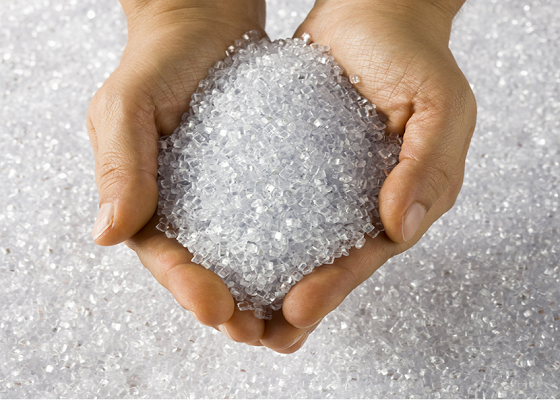
Expanded polystyrene (EPS) foam is valued for its lightweight protection and thermal insulation, which is why it appears in everything from appliance packaging to food service containers and construction materials. The problem begins when EPS reaches the end of its life. Because it is mostly air, even a small amount of EPS foam can occupy enormous space. Storage piles grow quickly, hauling costs rise, and many businesses choose landfill simply because recycling seems inconvenient or uneconomical.
Granulation changes this equation by converting loose EPS foam into practical, standardized material. The core idea is straightforward: instead of paying to move air, you process the foam into a dense, usable plastic form. In a typical recycling workflow, EPS waste is first prepared so it can be fed consistently into the system. The foam is then reduced in size and processed through a granulation line designed to melt and reform the material into pellets. The resulting EPS plastic pellets are compact, uniform, and easy to handle. Compared with loose foam, pellets require far less storage space and can be shipped in bulk with efficient loading, making logistics and inventory management significantly simpler.
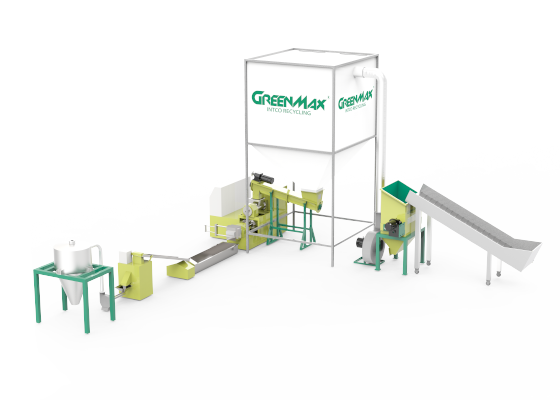
The value of EPS pellets lies in their ability to re-enter manufacturing. Once granulated, recycled EPS becomes a feedstock that can be blended with virgin resin or used in appropriate applications depending on quality requirements. Pellets are also easier to test and standardize than irregular foam scrap, which helps recyclers and buyers align on specifications. For many businesses, this creates a measurable financial benefit: disposal costs can be reduced, and the recycled output can generate revenue or offset the purchase of new plastic material.
Beyond economics, granulation supports more stable and scalable recycling programs. Facilities can collect EPS from multiple sources, process it into a consistent product, and supply downstream users with a form they can readily store and utilize. This improves the reliability of EPS recycling, which is often the missing link when companies attempt to recycle foam but struggle with transportation and end-market constraints.
Ultimately, turning EPS foam into EPS pellets is about transforming a bulky waste stream into a manageable commodity. With granulation equipment, EPS recycling becomes less dependent on frequent hauling and more focused on creating a material that fits modern manufacturing needs. For organizations looking to reduce waste, control costs, and strengthen sustainability performance, EPS granulation offers a practical path from foam scrap to reusable plastic value.