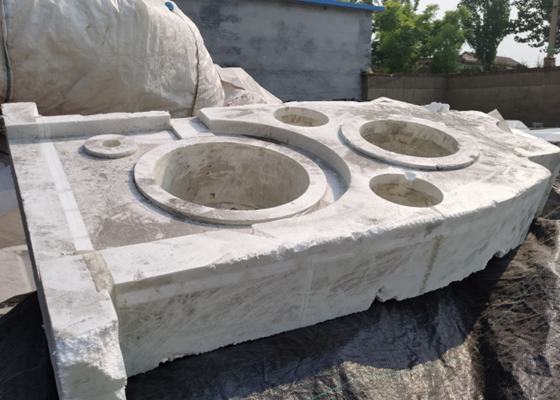
High-density EPS (Expanded Polystyrene) is commonly used in insulation materials, precision instrument packaging, appliance shell liners, and some industrial component packaging. Compared to low-density EPS, this type of material is structurally more rigid and has greater toughness. Although it has good impact resistance, there are several challenges in the recycling process:Dual challenges of volume and weight: Higher density increases transportation costs due to weight, while its large volume occupies recycling storage space.Increased crushing difficulty: Due to its compact structure, ordinary crushing equipment often cannot achieve the desired particle size in one go.Mixed impurities: EPS from construction sites and industrial packaging often comes with glue, dust, or other foreign objects, complicating the handling process.
The Role of the Foam Crusher in Recycling High-Density EPS
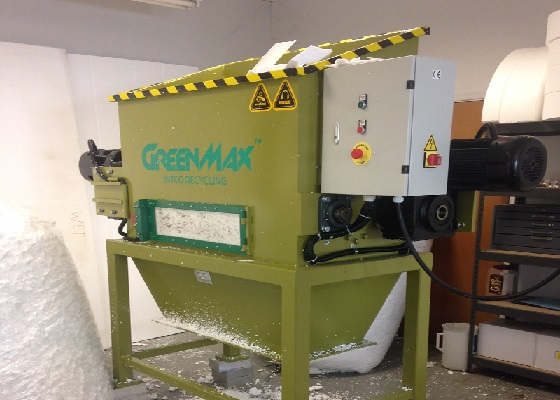
A foam crusher is a machine specifically designed to shred waste foam into small particles. It provides high-intensity cutting and continuous crushing for high-density EPS, creating a suitable feedstock for subsequent compression, hot-melting, or pelletizing.
Main functions include:
Efficient Crushing: High-speed blade rotation and optimized cutting angles efficiently crush tough EPS.
Controllable Particle Size: The machine can adjust the screen size to meet your needs, producing pellets suitable for hot-melting or pelletizing machines.
Space Saving: The crushed pellets have a high bulk density, significantly reducing transportation and storage costs.
Easy to Process: The crushed pellets can be easily melted, compressed into blocks, or fed directly into an extruder or pelletizer.
Typical Recycling Process
Pre-treatment: Recycled high-density EPS is cleaned to remove metal parts, tape, and obvious impurities.
Crushing: The EPS is crushed in a foam crusher to produce uniform particles.
Subsequent Processing: Depending on the recycling goal, the particles can be sent to a foam densifier for heat melting into blocks or to a pelletizing line for regenerated pellets.
Reuse: The resulting regenerated material can be used in the production of plastic products, building and decorative materials, gardening supplies, and other fields.