In today’s society, environmental awareness is becoming more and more popular, and public welfare organizations play an important role in promoting environmental protection. Among them, the recycling of waste EPS foam has become a significant task. EPS foam, that is, expanded polystyrene, is widely used in packaging, insulation and other fields in life. Because it is difficult to degrade naturally, the long-term accumulation of waste EPS foam can take up a large amount of land resources and may cause pollution to soil and water bodies. If improper incineration methods are adopted, toxic and harmful gases will also be generated, posing a threat to the atmospheric environment and human health. Therefore, the recycling of waste EPS foam is urgent. EPS compactors play a key role in this process, helping nonprofits to carry out recycling more efficiently.
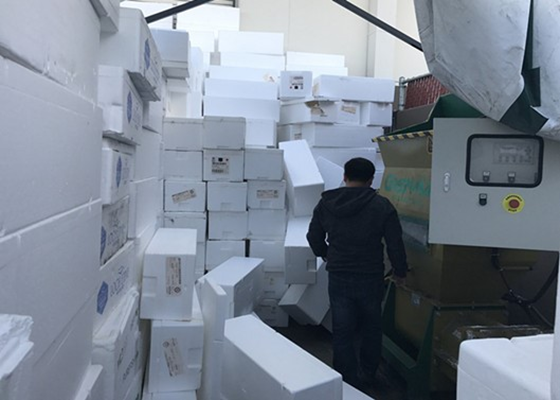
The current status and challenges of EPS foam recycling
EPS foam is difficult to recycle due to its light weight and large size. Traditional recycling methods, such as simple collection and stacking, not only take up a lot of space but also make it difficult to achieve effective resource reuse. If incineration is carried out, toxic and harmful substances such as dioxins will be produced without professional equipment, aggravating environmental pollution. Studies have shown that EPS foam can take hundreds of years to fully decompose in landfills, which is a huge waste for limited land resources. At the same time, EPS foam litter in the ocean is also increasing, seriously threatening marine ecosystems, and it is estimated that EPS foam accounts for up to 60% – 80% of marine debris.
For nonprofit organizations, the collected waste EPS foam often faces problems such as nowhere to store it and high transportation costs. Many public welfare organizations lack professional recycling equipment and technology, resulting in low recycling efficiency and difficulty in forming a large-scale recycling system. Moreover, due to the lack of standardization in the EPS foam recycling market, the unstable recycling price also affects the enthusiasm and sustainability of the recycling work of non-profit organizations.
How EPS compactor works and benefits
EPS compactor is a special equipment for compressing EPS foam, and its working principle is mainly to compress and reduce the volume of EPS foam by spiral extrusion and other methods. The operator simply places the waste EPS foam into the feeding port, and the spiral blade inside the machine cuts the foam into particles and then advances the compaction unit so that the foam is squeezed into blocks. In general, EPS compactors can have a compression ratio of up to 50:1 or even higher, such as some advanced equipment that can turn 7 kg/m³ EPS into a 400 kg/m³ EPS compression block.
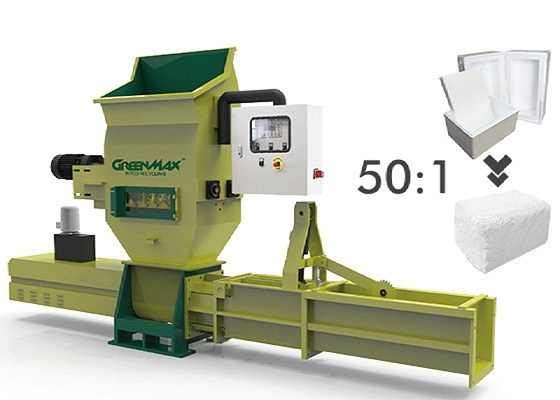
EPS compactors offer many advantages. Firstly, it significantly reduces the volume of EPS foam, making it easy to store and transport. EPS foam, which is originally bulky and difficult to handle, can be compressed to greatly reduce transportation costs and storage space requirements. Secondly, the cold pressing technology used in the EPS compactor does not require heating during the compression process, which does not change the chemical structure of the EPS foam, and also avoids the unpleasant odor caused by heating, protecting the operator’s health. In addition, EPS compactors are capable of handling many types of EPS foam waste, including fish boxes containing moisture, fruit and vegetable bins, etc., which is highly inclusive.
After the non-profit organization compresses EPS foam through EPS compactor, the resulting compression blocks can be sold to professional recycling companies or processing plants. These companies can further process it into various recycled products to achieve resource recycling. Non-profit organizations can also explore cooperation with relevant enterprises to carry out production projects of EPS foam recycled products, increase the added value of recycling efforts, and provide economic support for the sustainable development of non-profit organizations.