Expanded Polystyrene (EPS) is widely used in packaging due to its lightweight structure, excellent cushioning performance, and cost-effectiveness. However, its low density and large volume make disposal and recycling a persistent challenge for manufacturers and recyclers. Without proper treatment, EPS waste occupies significant storage space and leads to high transportation costs, while traditional disposal methods such as landfill are increasingly restricted due to environmental concerns.
To address these challenges, many companies are adopting EPS compactor solutions to improve recycling efficiency. An EPS compactor works by mechanically compressing loose foam into high-density blocks, significantly reducing its volume. Through this process, the volume of EPS waste can typically be reduced by up to 90–95%, making it far easier to store, handle, and transport. This initial densification step plays a critical role in optimizing the overall recycling workflow and lowering logistics costs.
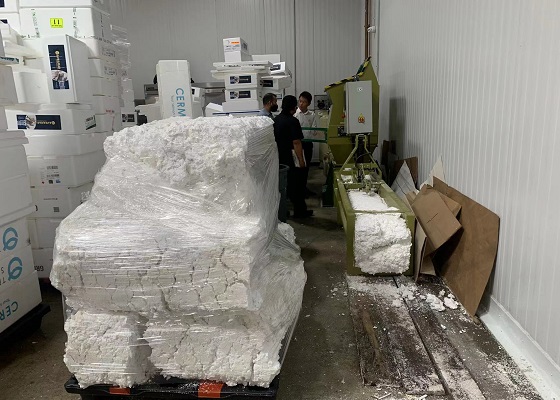
After compaction, the densified EPS blocks can be further processed through pelletizing. In this stage, the compressed material is fed into a granulator or pelletizing machine, where it is melted, filtered, and extruded into uniform plastic pellets. These recycled pellets can then be reused as raw material in the production of various plastic products, such as picture frames, construction materials, or injection-molded items. This closed-loop process not only reduces waste but also creates additional economic value from discarded foam.
The combination of EPS compactor and pelletizing equipment offers a complete and efficient recycling solution. It allows companies to handle EPS waste directly at the source, minimizing the need for external disposal services. At the same time, it supports sustainability goals by reducing environmental impact and promoting resource reuse.
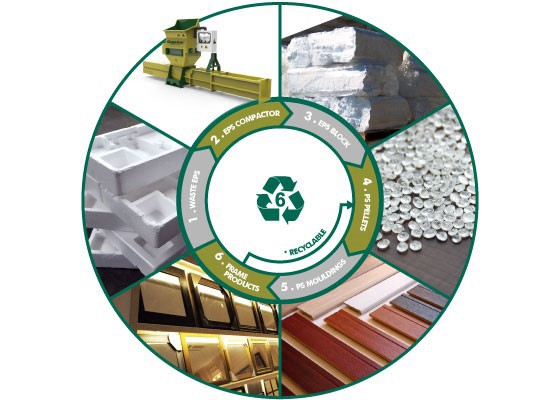
In practical applications, businesses that implement this integrated recycling approach often experience noticeable improvements. Storage space requirements decrease significantly, transportation frequency is reduced, and overall waste management costs are lowered. More importantly, recycled EPS material becomes a valuable resource rather than a burden.
As global regulations on plastic waste continue to tighten, adopting advanced recycling technologies such as EPS compactors and pelletizing systems is becoming an essential step for companies seeking both economic and environmental benefits. This approach not only enhances operational efficiency but also contributes to a more sustainable future for the plastics industry.