As polystyrene (EPS) materials are widely used in packaging, construction, home appliances and other industries, the large amount of EPS dust generated during cutting, engraving, and processing has increasingly become a major problem in enterprise waste management. These dust particles are small in size, easy to float, difficult to recycle and dispose of, if stacked or incinerated at will, not only pollute the environment, but also have fire hazards.
In response to this problem, EPS melting machine provides an ideal recycling solution, which can effectively melt and compress EPS dust into high-density recycled materials, helping enterprises achieve green circular production.
Features of EPS Dust and recycling challenges
EPS dust is the fine particles produced by EPS foam in the process of cutting, grinding, engraving and other processing, with the following characteristics:
Light and scattered: large volume, very low density, low transportation and stacking efficiency;
Easy to float and adsorption: easy to cause secondary pollution in the production workshop;
Flammable and explosive: there are fire and explosion hazards when there is too much accumulation;
Difficult to recycle: Traditional compression equipment has limited processing capacity and is prone to clogging or inefficiency.
Therefore, it is key to find a recycling equipment that is adaptable, efficient and stable in operation.
Application advantages of EPS Melting Machine in dust recovery
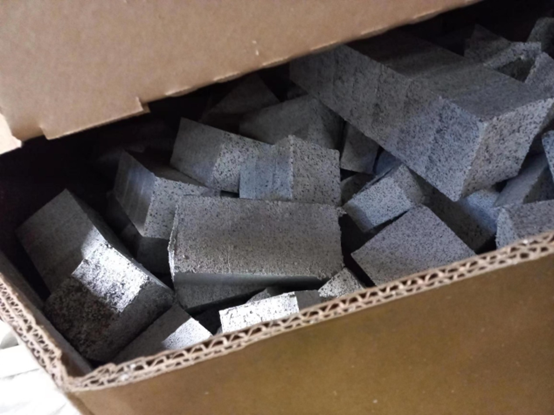
EPS melting machine uses screw heating and extrusion technology to heat and soften EPS dust and then melt and extrude it to form a continuous strip or brick-shaped high-density plastic block, which is easy to store, transport and subsequent reprocessing. It offers the following advantages in handling EPS dust:

- High adaptability, dust can also be easily handled
The EPS hot melt machine is compact and equipped with a stirring or feeding device at the inlet, which is suitable for foam dust of different particle sizes, and even light floating fine particles can enter the heating chamber stably. - Effective volume reduction and space saving
The volume ratio after hot melt compression can reach up to 90:1, which can greatly reduce storage and transportation costs and avoid dust accumulation problems. - Safe operation to avoid dust hazards
The equipment is enclosed design, and there is no dust flying during the treatment process, which effectively avoids the risk of employee inhalation and fire, and improves the safety level of the factory. - High regeneration value
Hot-melt treated EPS bricks can be used as recycled polystyrene raw materials for injection molding products, photo frames, hanging plates, mold filling materials and other fields, with good economic returns.
Use a scenario as an example
EPS engraving factory: a large amount of dust is generated during the cutting and molding process, which is processed on site by the hot melt machine to keep the workshop clean and tidy;
Packaging production line: leftovers and cutting dust are collected and melted in a centralized manner, and uniformly converted into recycled materials;
Building materials manufacturers: used for foam powder recovery in the cutting process of exterior wall insulation boards;
Recycling & Transfer Stations: Specialized in the processing of EPS dust and scraps collected from various industries.
EPS dust is an often overlooked but large waste that can be effectively managed with both environmental and operational burdens. The use of EPS melting machine to treat foam dust not only improves the efficiency of resource utilization, but also conforms to the development trend of green and low-carbon. In the future, with the tightening of environmental protection policies and the improvement of corporate sustainability awareness, hot melt technology will play an increasingly important role in the field of foam recycling.