Expanded polystyrene (EPS) is lightweight, bulky, and costly to transport when collected loose. An EPS compactor solves this problem by compressing foam into dense blocks that are easy to store, ship, and sell back into the recycling stream. With a reliable EPS compactor on-site, companies can turn a messy waste headache into a measurable resource recovery program while reducing hauling frequency and carbon emissions.
How it works is simple: operators feed clean EPS into the hopper, a screw or hydraulic system applies continuous pressure, and compacted ingots exit into bags or onto pallets. Because volume reduction can reach 40:1 or higher, the EPS compactor quickly pays for itself where foam volume is high.
Case 1: Seafood processing and cold-chain distribution
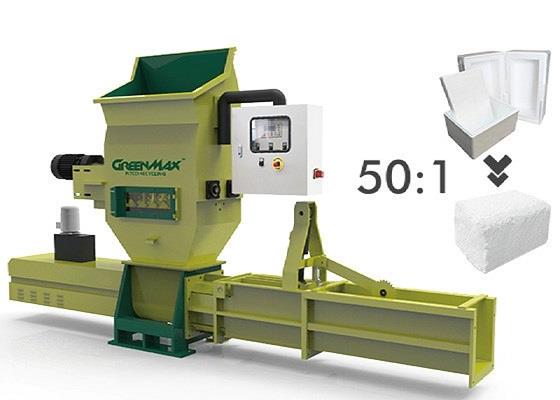
A coastal seafood processor receives daily deliveries in EPS fish boxes and insulated liners. Previously, the facility stacked loose foam in a yard and scheduled frequent pickups. After installing a GREENMAX EPS compactor near the receiving dock, staff began compacting foam as it was unpacked. Storage space was reclaimed, pickup intervals were extended, and the company could ship dense blocks to a regional recycler instead of paying for disposal. The recycler preferred consistent block density, which improved pricing and reduced contamination disputes.
Case 2: Appliance and electronics packaging
A mid-sized appliance assembler unpacks compressors, panels, and accessories protected by molded EPS. The packaging waste spiked during peak production, creating safety risks and forklift congestion. The plant deployed a GREENMAX EPS compactor beside the packaging line, assigning one operator per shift to compact foam continuously. The result was a cleaner aisle layout, fewer internal moves, and predictable outbound bales/blocks that fit standard pallets. The compacted EPS was then sold to a plastics reprocessor that converts it into pellets for picture frames and construction profiles, helping the plant offset waste-management costs.
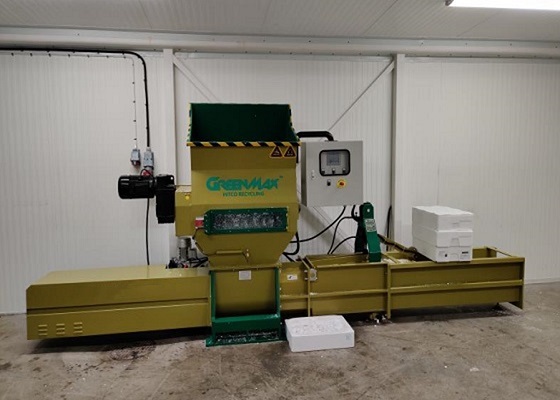
Best practices for maximizing value include separating EPS from other plastics, keeping it dry, training operators to avoid food residue, and tracking monthly foam input versus compacted output. Many sites also use meters on the EPS compactor to report diversion rates and support ESG audits and customer requirements. When paired with clear signage and a simple incentive for correct sorting, an EPS compactor becomes the backbone of a scalable EPS recycling workflow.
For organizations seeking practical circularity, the EPS compactor is one of the fastest upgrades: less volume, lower logistics cost, and a direct path from discarded foam to new products.