Expanded polystyrene (EPS) is widely used for protective packaging, food containers, and insulation, but its lightweight, bulky nature makes disposal costly and recycling difficult. For many facilities, the turning point is installing an EPS recycling machine that can convert loose foam into a transport-friendly form. Two mainstream approaches dominate EPS densification today: cold compression and thermal densification (often called hot melt). Each method can improve handling and economics, but they serve different operational priorities. Understanding their advantages—and the tradeoffs between them—helps recyclers and foam generators design a recycling stream that is stable, efficient, and market-ready.
Cold compression technology compacts EPS using mechanical pressure without melting it. The material is squeezed into dense logs or blocks, reducing volume significantly while preserving the polymer’s original structure. Because the process does not rely on heating elements or melt chambers, cold compression is typically straightforward to operate and can be well-suited for sites that prioritize simplicity, lower energy consumption, and a cleaner mechanical workflow. In many real-world settings, cold compression can stabilize a messy waste stream quickly: foam that once overflowed bins becomes a manageable, stackable output that can be palletized and shipped on a schedule. Another practical advantage is that cold compression can be gentler with mixed or slightly moist EPS, because it is not sensitive to melt quality in the same way as thermal systems. When a facility wants a fast, operationally simple method to reduce storage and hauling costs, cold compression is often the first solution considered.
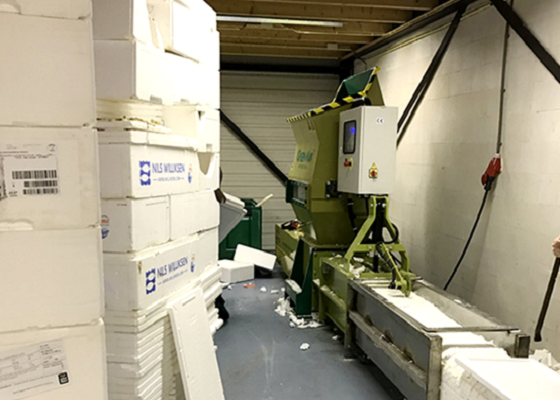
Thermal densification, by contrast, uses controlled heat and pressure to melt EPS and form solid ingots. This “hot melt” approach typically achieves higher density than cold compression, producing blocks that are heavier per unit volume and therefore more efficient to transport long distances. Thermal densification can also yield a more uniform output because the material is fused into a solid mass, which some downstream buyers prefer for reprocessing. When quality control is strong—especially with clean, consistent EPS feedstock—hot melt systems can create highly dense product that maximizes container utilization and can improve the overall cost per ton moved. In regions where recyclers are far from the collection point, or where logistics dominate the economics, the density advantage of thermal processing can be decisive.
Comparing the two approaches, cold compression generally emphasizes operational simplicity and energy efficiency, while thermal densification emphasizes maximum density and downstream acceptance in certain markets. Cold compression machines often start up quickly, have fewer heat-related considerations, and can be attractive for facilities that want to minimize power draw and maintenance complexity. Thermal systems, while powerful, require more attention to temperature control, feedstock cleanliness, and routine maintenance to ensure stable melting performance. If EPS is heavily contaminated with food residue, adhesives, or non-EPS plastics, thermal densification may demand more rigorous sorting and pre-processing to avoid odor, smoke, or inconsistent output.
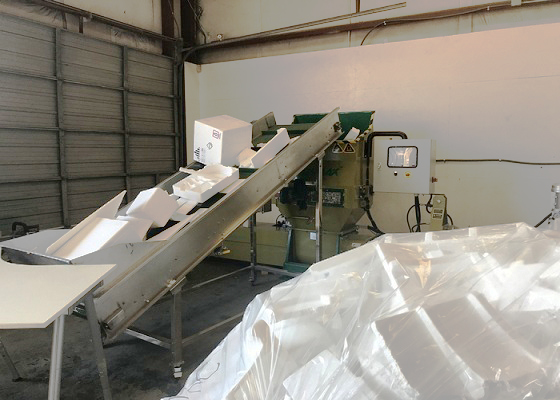
In practice, the “best” EPS recycling machine depends on the full recycling chain: the type and cleanliness of incoming EPS, available space and power, labor constraints, and the distance to the next processor. Cold compression can be an excellent fit for high-volume generators seeking a reliable, low-friction way to shrink foam immediately. Thermal densification can be ideal when transportation distance is long and maximizing density is the key to profitability. Both technologies contribute to the same goal: turning bulky EPS into a valuable feedstock that can re-enter manufacturing streams, reduce landfill burden, and move the industry closer to circular use of plastics.