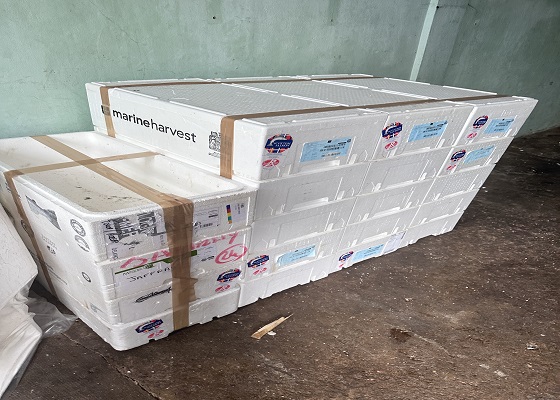
Foam packaging – the white, lightweight blocks that protect electronics, appliances and online orders – is one of the most common yet least recycled plastics in the United States. Because it is mostly air, it is expensive to transport in loose form and is often excluded from curbside programs. Across the country, however, community recycling centers are starting to change that story by pairing local drop-off programs with foam recycling machines that densify the material on site.
In many regions, the starting point is simple: give residents a place to bring clean foam packaging. A national network of EPS (expanded polystyrene) packaging drop-off locations now spans dozens of states, from Alabama and Arizona to California and New York, illustrating that foam recycling is moving beyond isolated pilots to a more consistent service in many communities. At these sites, residents are typically asked to remove tape, labels and plastic film, and to separate packaging blocks from contaminated food containers.
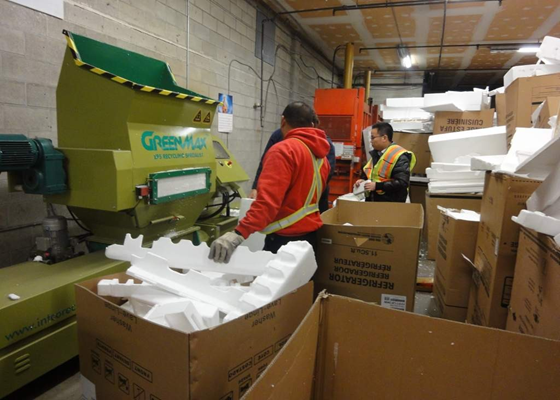
The key technology that makes these programs viable is the foam recycling machine, often called a foam densifier. These machines compress bulky foam packaging into dense blocks or logs, reducing its volume by up to 90% and turning a truckload of “air” into a compact, stackable commodity. Once densified, the material can be shipped economically to plastics recyclers that grind and reprocess it into pellets for picture frames, molding, construction products and other durable goods.
On the East Coast and in the Mid-Atlantic region, many counties have integrated foam recycling machines into municipal drop-off centers. Residents drive in with bags of foam packaging; staff feed the material into the machine, which shreds and compacts it into dense ingots. Several programs report that a single site can serve tens or even hundreds of thousands of residents when combined with good signage and public education. For communities facing foam food-service bans, these systems also provide a way to keep remaining packaging foam out of landfills while broader policy changes take effect.
In the Midwest, foam recycling machines are being deployed at county recycling parks and regional transfer stations. Here, the focus is often on capturing large volumes of packaging from appliance retailers, furniture stores and e-commerce distribution hubs alongside residential material. Counties in states such as Wisconsin and Illinois have highlighted how a single densifier can serve multiple municipalities, especially when paired with satellite drop-off sites that consolidate foam before transport.
In the Southeast, foam recycling is increasingly tied to broader waste-reduction goals. Counties and cities in North Carolina and Florida, for example, have installed foam recycling machines at central drop-off centers and promoted them through Earth Day events, school programs and local media. Success stories from these communities show that when residents understand that their foam packaging will be recycled locally rather than landfilled, participation rates rise quickly.
Even in rural areas and smaller towns, foam recycling machines are helping close the loop. Some programs place equipment in secure outdoor containers so that staff can process foam when time allows, while residents deposit material anytime the site is open. Others collaborate with nonprofit groups that organize periodic “foam collection days,” then bring the material to a regional site equipped with a densifier.
Across these diverse regions, a common model is emerging:
Community access – provide convenient drop-off locations for clean foam packaging.
On-site densification – use foam recycling machines to collapse volume and create marketable blocks.
Stable outlets – partner with recyclers that buy densified foam and turn it into new products.
Education – teach residents how to prepare foam properly and why their efforts matter.
While foam packaging still represents a small fraction of total municipal recycling tonnage, community programs built around foam recycling machines are proving that this material can be recovered efficiently. By combining local engagement with the right technology, regions across the United States are transforming a problematic waste into a reusable resource and building practical, scalable models for foam packaging recycling.