With the deepening of the global sustainable development concept, the construction industry, as a major consumer of resources, is gradually exploring more environmentally friendly and efficient material reuse paths. Expanded polystyrene foam (EPS foam) is widely used in building packaging and insulation due to its excellent thermal insulation properties, lightweight, and cushioning characteristics. However, used EPS foam has long been difficult to recycle and process due to its large volume and low density, making it a significant source of white pollution.In recent years, the application of foam compactor technology has provided a feasible solution for the recycling and reuse of EPS foam. Especially in the process of remaking recycled EPS foam into XPS foam, foam compactors play a key role.
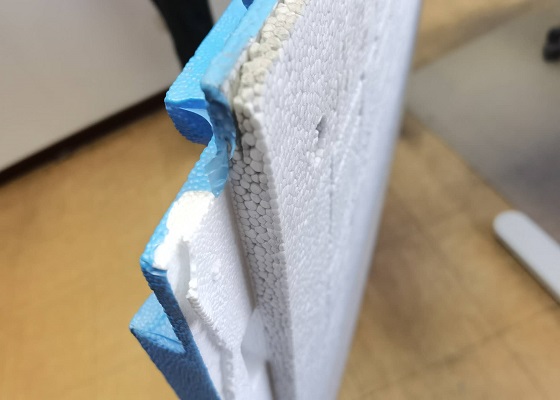
Introduction to EPS Foam and XPS Foam
EPS Foam (Expanded Polystyrene): Typically used for packaging and disposable products, it is a closed-cell foam structure that is formed by expansion using a foaming agent, and it has good cushioning and thermal insulation properties.
XPS Foam (Extruded Polystyrene): Manufactured through an extrusion process, it has a more uniform and dense cell structure and is commonly used for thermal insulation in building walls, roofs, and floors.
Due to its superior thermal insulation performance and structural strength, the application of XPS in building energy saving is gradually expanding. Recycling EPS foam as raw material for XPS not only reduces costs but also decreases waste emissions, offering significant environmental and economic value.
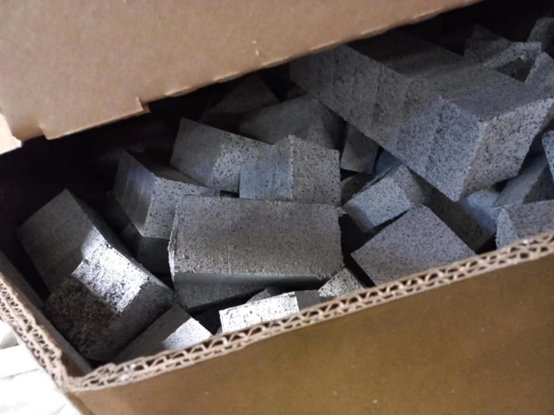
The role of the foam compactor
Foam compactors can compress large volumes of EPS foam, reducing their size by over 90%, transforming them into high-density foam blocks (bales). These bales facilitate storage, transportation, and subsequent processing, serving as the crucial first step in converting discarded EPS into reusable resources.
From EPS to XPS: The Recycling Process
Collection and Classification: Collect and classify discarded EPS foam from construction sites, logistics centers, etc.
Cleaning and Drying: Remove surface impurities and moisture to improve subsequent processing quality.
Compression Processing: Use a foam compactor to compress EPS foam into dense blocks.
Crushing and Pelleting: Break down the compressed blocks and melt them to create regenerated polystyrene pellets for XPS production.
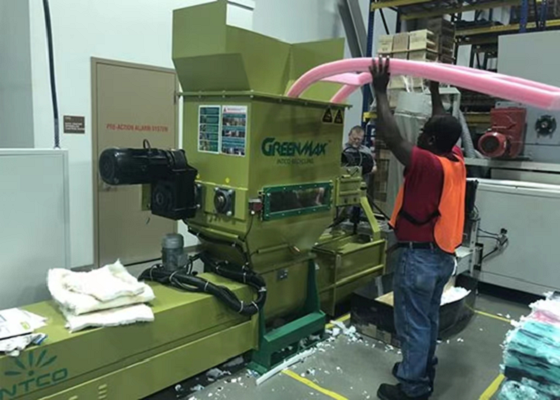
XPS Production: Mix with raw materials in proportion and manufacture new XPS insulation boards through the extrusion process.
Opportunities for Sustainable Transformation in the Construction Industry
Recycling EPS foam through foam compressors and converting it into XPS foam not only achieves material recycling but also promotes the construction industry’s development towards a low-carbon, green direction. This process not only reduces dependence on raw fossil resources but also lowers carbon emissions and solid waste disposal costs.