As the problem of plastic pollution becomes increasingly serious, the recycling of foam plastics (especially EPP foam) has become an important topic in the field of plastic recycling. EPP foam is widely used in packaging, automotive parts, home appliances and other industries. Due to its light weight and excellent protective properties, it has gradually become the preferred material for many products. However, due to its large size, fragility and easy contamination, the recycling rate of EPP foam is low, which puts great pressure on the environment. Therefore, the research and application of effective recycling technology, especially mechanical recycling and chemical recycling methods, is of great significance to improve the recycling efficiency of EPP foam and reduce the environmental burden.

Application of Foam Densification
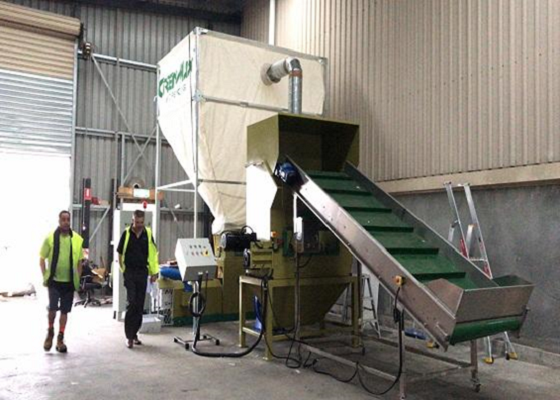
Foam densification technology is to compress the bulky EPP foam into a more compact block that is easy to transport and store. The core of this technology is to squeeze out the air in the foam plastic through a special foam compactor, reducing its volume to about one-90th of the original volume, thereby greatly reducing transportation and storage costs.
After preliminary screening and cleaning, the EPP foam enters the foam densifier. Through high temperature and mechanical pressure, the air in the EPP foam is squeezed out, making the foam material denser. The compacted foam is cooled and formed into a dense block for subsequent processing and recycling.
Chemical recycling method
Chemical recycling method refers to the conversion of discarded EPP foam into raw materials or other useful products through chemical reactions. This process decomposes the polymer in EPP foam by means of cracking, dissolution or chemical conversion, thereby recovering the chemical components in it for the production of new materials or as raw materials for other industries.
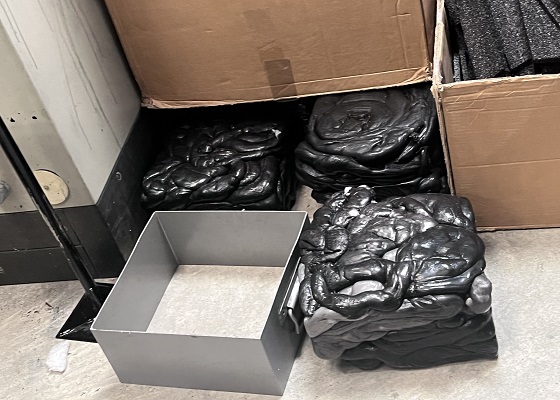
Combining foam densifier with chemical recycling method can maximize the efficiency of EPP foam recycling. First, the foam compaction technology greatly reduces the volume of EPP foam, making it easier to transport to recycling facilities. Through compaction, pollutants in the foam can be effectively removed, improving the efficiency of the chemical recycling process. Secondly, the chemical recycling method can efficiently decompose the foam, extract valuable raw materials from it, and provide new raw materials for the plastics industry.