With the improvement of environmental awareness, the recycling and reuse of plastic waste has become an important issue facing the world. Foam plastics, especially EPE (expanded polyethylene), are widely used in various packaging materials, especially in the packaging of fragile items such as mirrors, glass products, home appliances, etc. Due to its good cushioning properties and lightweight characteristics, EPE foam is widely used to protect the safety of products during transportation. However, due to its low density and the large amount of space it occupies, the recycling of EPE foam faces certain challenges. By utilizing Foam Densifier, the recycling of this foam material becomes more efficient and feasible.
EPE foam is widely used in the packaging of mirrors, furniture and other fragile items because its softness and impact resistance can effectively prevent damage during transportation. However, this foam material has several recycling challenges:

- Low density and large volume: EPE foam contains a lot of air, is large in volume and light in weight, which not only takes up too much storage space but also increases transportation costs.
- Contamination issues: EPE foam used in mirror packaging may be contaminated by oil, dust or other impurities, which makes it more difficult to clean and recycle the foam.
- Limited recycling facilities: Not all recycling stations have the facilities and equipment to handle foam, especially those that require compression and densification, and many places lack such technical support.
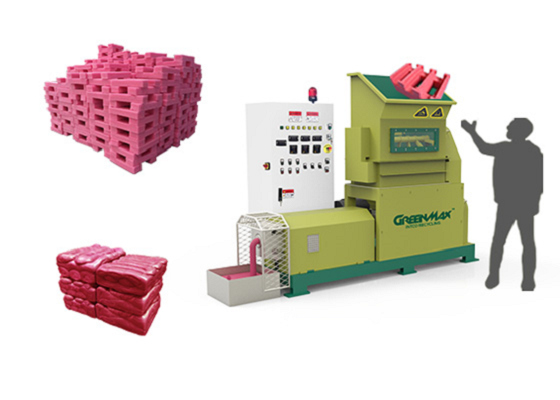
Application of Foam densifier in EPE mirror packaging recycling
The recycling of EPE mirror packaging using foam densifiers can effectively solve the above problems. Here are a few key benefits:
- Reduce volume and transportation costs
The volume of EPE foam can be compressed to 1/90 of the original volume by foam densifier. This compression drastically reduces the space required to transport the foam to the recycling station, reducing carbon emissions and costs during transportation. The compressed foam can be stored and transported more efficiently, resulting in more efficient recycling. - Improve recycling efficiency
Foam densifier compresses the foam to form a reusable “brick” material. These materials can be further processed into other useful products such as insulation, building materials, renewable plastics, and more. This high-density, easy-to-store foam makes subsequent recycling easier and more efficient. - Environmental benefits
By reducing the volume of waste EPE foam, foam densifiers not only reduce the energy required to dispose of this waste, but also reduce the footprint of landfill space. Turning waste foam into reusable products further reduces the need for virgin plastic, lowers the carbon footprint and energy consumption, and has a positive impact on environmental protection.
Through densification, the foam densifier can refine clean EPE foam into high-density materials. This reduces the impact of contamination on the quality of foam materials during the recycling process, thereby increasing the value of the recycled foam. Although some contaminated foam materials still need to be cleaned, the densification process can remove unqualified or heavily contaminated foams to ensure the purity of the recycled materials.