Some of the EPS is also piling up on the world’s remote beaches. Last year, researchers estimated that the size of the Great Pacific Garbage Patch — as the huge mass of trash in the Pacific Ocean has become known — weighed at least 87,000 tons. Ultimately, some of that EPS disintegrates into tiny microparticles that get swallowed by fish and enters our own food chain.
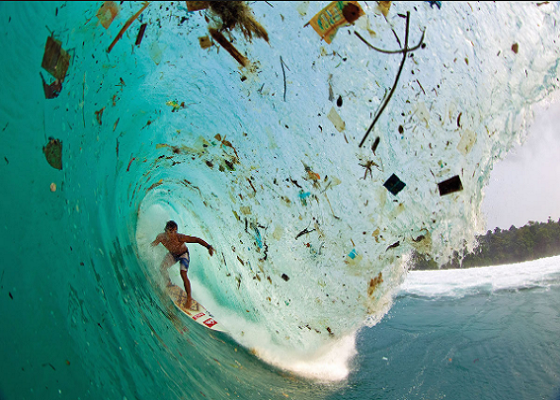
In fact, plastic is recyclable. “When a product claims to be recyclable, my immediate response is, OK, ‘Where? How?’” said Joe Dunlop, a waste reduction administrator in Athens-Clarke County, Georgia, who’s been watching recycling markets for 20 years. Now we can answer this question.
The most common type of EPS in everyday life is polystyrene, abbreviated as EPS. This EPS can be 100% recycled as long as it is not contaminated, like fruit trays, express packaging.
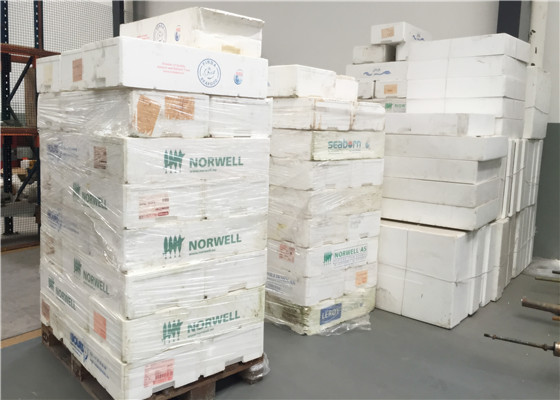
These EPSs tend to collect through layers and reach the EPS recycler. EPS recyclers have a professional EPS recycling machine, GRRENMAX A-C100, an EPS compactor that compresses EPS in a 50:1 ratio and uses the screw to squeeze the air out of the EPS, like marshmallow. Turned into marble.
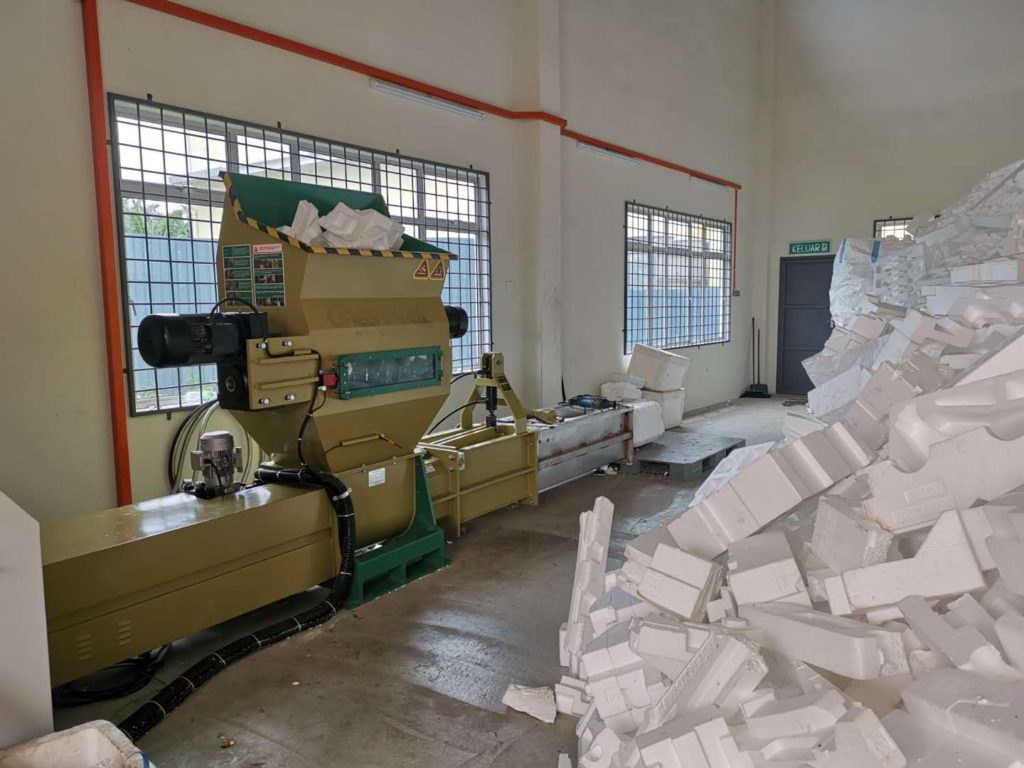
The recycled EPSs from the recycling machine will become recycled EPS blocks, which can be easily transported and sold by the recyclers to the end market, and then made into photo frames, park benches, wood-like materials and so on.
Therefore, don’t be resistant to all EPS products, we can’t deny the convenience that EPS brings to our economy and life. People can refuse to use disposable EPS, and other EPS products will be handed over to the GREENMAX recycling machine.