Expanded polypropylene (EPP) foam is now widely used in automotive components, protective packaging, logistics boxes, and consumer products thanks to its light weight, impact resistance, and full recyclability. Globally, the EPP foam market is growing at more than 7% per year, driven by demand for lightweight and sustainable materials in automotive and packaging applications.
However, actual recycling of EPP foam still lags behind its potential. Studies estimate that only a relatively small share of global EPP waste is effectively recycled because of limited collection and processing infrastructure and the material’s low bulk density, which makes transport expensive. At the same time, Asia-Pacific and Europe are expanding EPP usage rapidly, putting pressure on waste systems to handle more post-consumer and post-industrial foam.
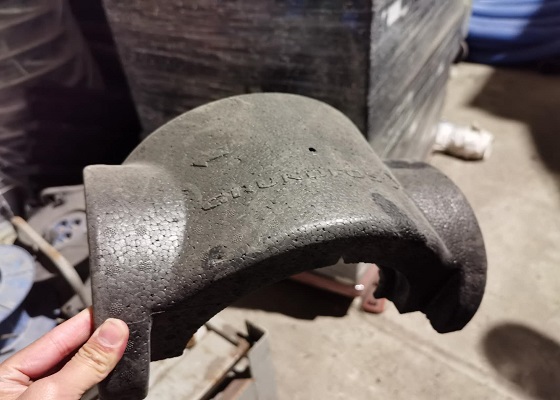
This is where a foam densifier becomes essential. EPP foam is mostly air, so loose scrap takes up huge space while having very little weight. A foam densifier compresses and often hot-melts the foam, turning voluminous waste into dense blocks or ingots that are 10–50 times smaller in volume, drastically cutting storage and transportation costs and making recycling economically feasible.
In a typical EPP recycling line, collected foam is crushed, fed into the foam densifier, then compacted or hot-melted into dense blocks. These blocks are easy to palletize and ship to downstream recyclers, who shred and granulate them into polypropylene (PP) pellets. The pellets can then be re-used in injection-molded parts, packaging, or other PP products, closing the loop and supporting a circular economy.
GREENMAX Case Example
GREENMAX, a brand of INTCO Recycling, has developed dedicated EPP foam densifier systems to tackle this challenge. Their EPP recycling solution converts loose EPP packaging and components into compact blocks or pellets that can be bought back by GREENMAX and reused to manufacture new PP products.
In one recent GREENMAX EPP project, an industrial user of EPP packaging installed a foam densifier at its plant instead of sending foam waste to landfill. Waste EPP from returnable packaging and damaged parts is now collected on-site, processed through a GREENMAX EPP densifier using hot-melt technology, and transformed into high-quality foam ingots. These ingots are sold as secondary raw material to recyclers and PP processors, generating recycling revenue while eliminating disposal fees and freeing warehouse space.
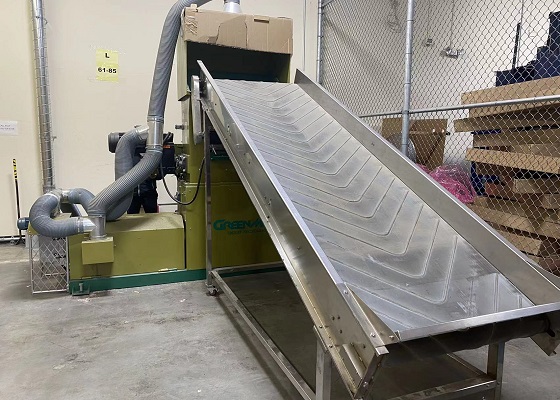
For companies in automotive, electronics, logistics, and e-commerce packaging, adopting a foam densifier solution makes EPP foam recycling technically simple and financially attractive. It turns a low-density “waste problem” into a consistent feedstock stream, supports corporate sustainability targets, and aligns with global trends toward lightweight, recyclable materials. As EPP usage continues to expand worldwide, onsite densification will be a key technology to unlock higher recycling rates and a more circular EPP value chain.