EPE film is a lightweight, porous and elastic material with excellent impact resistance, cushioning properties and thermal insulation effects. Therefore, it is widely used in packaging, construction, electronic product protection and other fields. EPE film is mainly used for protective packaging of electronic products, home appliances, furniture and other fragile items, providing shockproof and anti-scratch functions. Due to its good thermal insulation properties, EPE films are also commonly used as insulation layers for walls and roofs of buildings. It is also widely used in the fields of protection of mechanical parts and automobile interior decoration.
Although EPE film has a long service life, its extensive application and use cycle will produce a large amount of waste. The sources of waste EPE films mainly include the packaging industry, construction industry, automobile industry, etc.
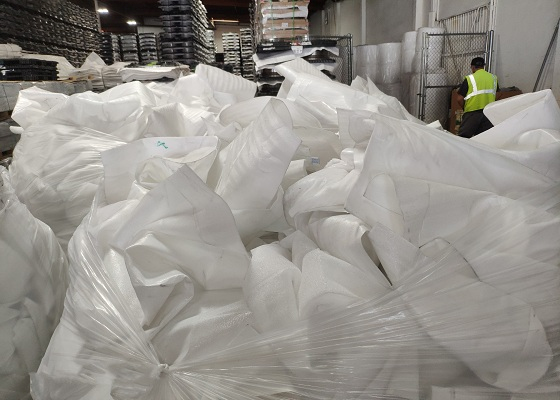
The recycling of waste EPE films is more challenging than ordinary polyethylene films. EPE films have a foamed structure, are bulky but light in weight, and have high transportation and storage costs, making recycling more difficult. EPE films are often mixed with other materials or contaminated during use, such as tape, paper, oil, etc. in packaging. They need to be classified and cleaned before recycling.
The market value of EPE film is low, so recycling companies lack enthusiasm, resulting in a low recycling rate.
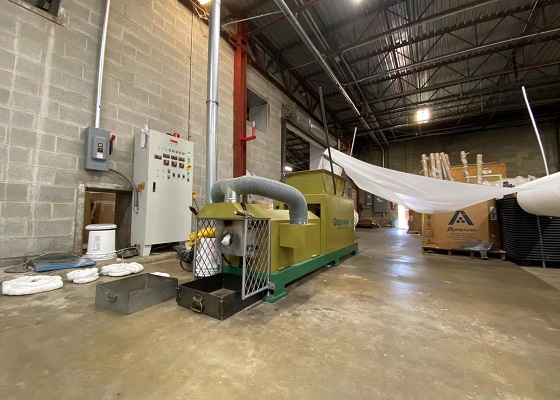
However, for the current recycling of EPE film, GREENMAX has proposed a better recycling method, which uses foam densifier to recycle EPE film through the main steps of crushing, heating and melting, and extrusion. If the EPE film to be recycled is too thin, it does not even need to be broken and can be directly hot melted. The compression ratio of GREENMAX foam densifier can reach 90:1, effectively reducing the waste footprint.
With the increasing awareness of global environmental protection, the recycling and reuse of waste EPE films has become an important direction to promote sustainable development. In the future, there may be significant progress in improving the recycling efficiency of foam densifiers, optimizing regeneration technology, and developing degradable alternatives.
The recycling and reuse of discarded EPE film is a link that cannot be ignored in plastic pollution control. By promoting the improvement of recycling technology, optimizing recycling systems and promoting the application of sustainable materials, we can effectively reduce the impact of waste on the environment and achieve efficient use of resources. In the future, with technological progress and policy support, the recycling and regeneration of EPE films is expected to play an important role in a wider range of fields, promoting green development and the upgrading of the environmental protection industry.