Foam packaging is widely used in furniture, appliances, electronics, seafood, logistics and industrial manufacturing because it is lightweight, protective and cost-effective. However, once the product reaches the customer or distribution center, the same foam quickly becomes a difficult waste problem. Loose EPS, EPE, EPP and XPS foam takes up large storage space, fills trucks with very little weight, increases handling costs and often creates pressure for companies that want to improve their waste management performance. A GREENMAX foam compactor offers a practical way to solve this problem by turning bulky foam waste into dense, recyclable material.
The working logic of a GREENMAX foam compactor is simple but highly effective. Instead of sending loose foam directly to landfill or paying for frequent waste collection, companies can feed the material into the machine. The compactor reduces the foam volume through mechanical compression, hot melting, hydraulic compression or surface-fusion compaction, depending on the type of foam and the required output. After processing, the loose foam becomes compact blocks or ingots that are much easier to stack, store and transport.
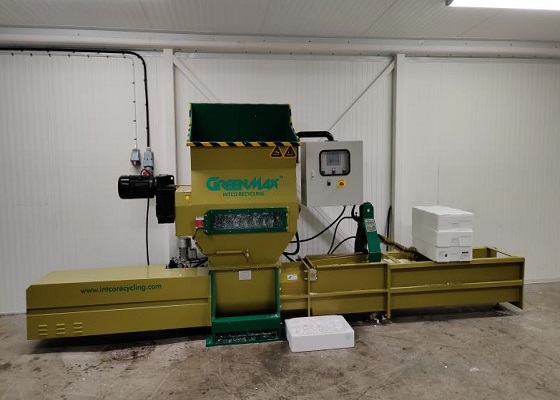
This process brings direct value to daily operations. For warehouses and factories, compacted foam means cleaner working areas and more available space. For logistics teams, it means fewer trucks and lower transportation costs. For sustainability managers, it means foam waste can enter a recycling route instead of being treated as ordinary waste. For recyclers, compacted foam blocks are easier to collect in large quantities and prepare for downstream pelletizing or material reuse.
GREENMAX foam compactors are especially useful for companies that generate foam waste continuously. Furniture retailers may handle large amounts of EPS packaging every day. Electronics manufacturers may produce clean EPE protective packaging waste from incoming materials. Automotive suppliers may deal with EPP packaging or transport trays. Seafood markets and cold-chain businesses may need to process used fish boxes. In each case, the key challenge is the same: the foam is too bulky before compaction. GREENMAX helps customers reduce this volume and create a more efficient recycling process.
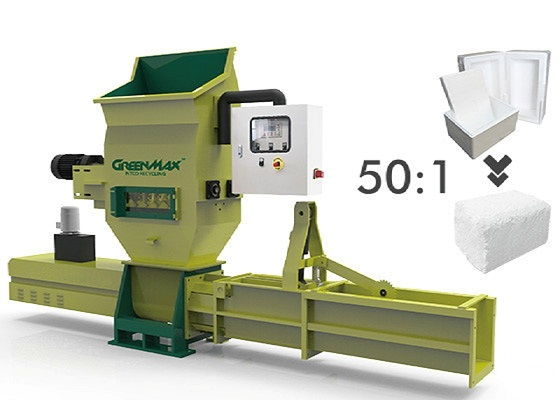
Another important advantage is that compacted foam can often be sold as recyclable material, especially when it is clean and properly sorted. This allows companies to move from waste disposal to resource recovery. Instead of paying only for removal, they can build a recycling model that reduces cost and may generate additional income.
With reliable equipment, practical engineering and recycling experience, GREENMAX helps companies manage foam waste in a smarter way. A GREENMAX foam compactor is not only a machine for volume reduction; it is a bridge between daily waste management and long-term recycling value.