Styrofoam, also known as expanded polystyrene (EPS), is widely used in packaging and insulation due to its lightweight and insulating properties. However, the same qualities that make Styrofoam an effective material for these applications also make it a significant environmental challenge. Styrofoam is not biodegradable, and its large volume compared to its weight often results in inefficient waste management. This has led to Styrofoam accumulating in landfills and oceans, causing severe environmental pollution. Fortunately, advancements in recycling technology, particularly the Styrofoam densifier, offer a viable solution to this growing problem.
A Styrofoam densifier is a machine designed to compress Styrofoam waste, significantly reducing its volume. This process is crucial because Styrofoam’s low density makes it difficult and costly to handle in large quantities. The densifier works by applying heat to the Styrofoam, causing it to soften. Once softened, the material is compressed into a dense block or log. This high compression ratio makes it much easier to store and transport the waste, and it also opens up the possibility for Styrofoam to be recycled into new products.
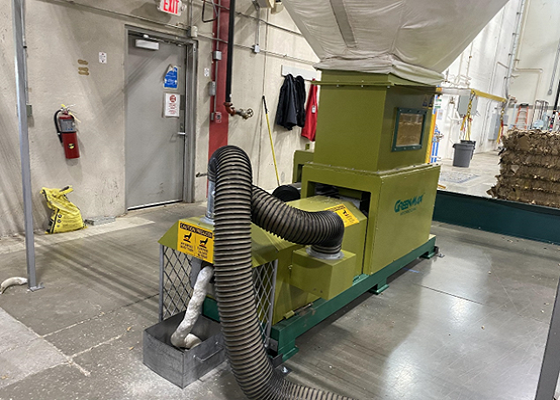
One of the key advantages of using a Styrofoam densifier is its ability to achieve a high level of compression. While traditional methods of recycling Styrofoam, such as shredding or compacting, may only reduce its volume by a factor of 20 or 30, densifiers that use heat-melting technology can achieve ratios as high as 90:1. This means that a large quantity of Styrofoam can be reduced to a fraction of its original size, drastically improving storage and transportation efficiency. The compacted Styrofoam can then be processed further, often being turned into products such as insulation materials, picture frames, or even new Styrofoam items.
One example of the benefits of Styrofoam densifiers can be seen in industries such as food packaging, where Styrofoam waste is generated in large amounts. Many companies in the food industry receive their products in Styrofoam containers, which often accumulate quickly. By using a Styrofoam densifier, these businesses can compress the Styrofoam into small, manageable blocks, reducing the need for storage space and making it easier to transport the material to recycling facilities.
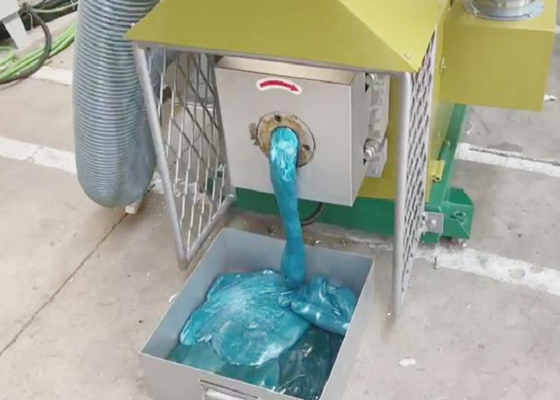
The environmental benefits of using a Styrofoam densifier are also significant. By reducing the volume of Styrofoam waste, these machines help prevent Styrofoam from ending up in landfills or the ocean, where it can take hundreds of years to decompose. Furthermore, the compressed material can be repurposed, reducing the need for new Styrofoam production and conserving valuable resources.
In conclusion, the Styrofoam densifier offers an effective and efficient solution for recycling Styrofoam waste. With its ability to compress Styrofoam into dense blocks, it reduces transportation costs and environmental impact while providing a valuable resource for creating new products. As more industries adopt this technology, Styrofoam waste can be better managed, contributing to a cleaner and more sustainable future.