With the growth of e-commerce and home appliance sales, a large amount of Styrofoam packaging materials are used to protect products. However, in home appliance return centers, discarded Styrofoam packaging often becomes a source of environmental pollution. Using Styrofoam Compactor, these materials can be effectively recycled, reducing waste and promoting sustainable development.
Styrofoam issues at appliance return centers
Every day, appliance return centers receive a large number of products due to damage, customer rejections, or exchanges. These products are often packed with a lot of Styrofoam to prevent damage during transportation. Due to the large size and light weight of Styrofoam, handling this waste material faces the following challenges:

Limited storage space: Unprocessed Styrofoam is large and takes up a lot of storage space.
High transportation costs: Due to the light weight but large size of Styrofoam, the cost of transporting it to recycling centers is high.
Environmental pollution: If directly landfilled or incinerated, Styrofoam will cause environmental pollution and release hazardous substances.
The role of Styrofoam Compactor
Styrofoam Compactor is a device specially used for processing foam plastics. It greatly reduces the volume of Styrofoam through compression and melting, thereby improving recycling efficiency. The compression ratio of GREENMAX styrofoam compactor can reach 50:1. It is a popular recycling equipment that uses relatively mature cold pressing technology.
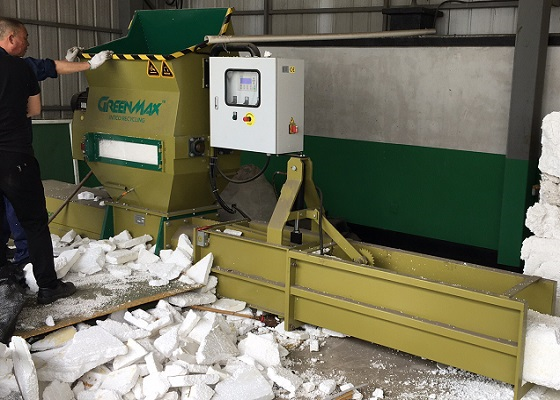
In the home appliance return center, you first need to evaluate the amount of Styrofoam produced every day, determine whether you need to equip it with a Styrofoam Compactor, and choose the appropriate equipment model. Cooperate with professional recycling companies or recycled plastic manufacturers to send the compressed Styrofoam to the recycling plant to ensure that the material is effectively reused.
Using Styrofoam Compactor to process Styrofoam packaging generated by home appliance return centers can not only effectively reduce the impact of waste on the environment, but also reduce operating costs and improve resource utilization. With the continuous advancement of recycling technology, more intelligent recycling systems can be used in the future to make Styrofoam recycling more efficient and promote the development of a circular economy.