During the transportation and storage of seafood, EPS foam (Expanded Polystyrene) is widely used as packaging material due to its excellent thermal insulation, waterproof and impact resistance properties. However, discarded EPS foam packaging is often directly discarded or landfilled due to difficulty in recycling and high processing costs, resulting in serious environmental pollution. The emergence of EPS foam compactor provides a feasible solution to this problem.
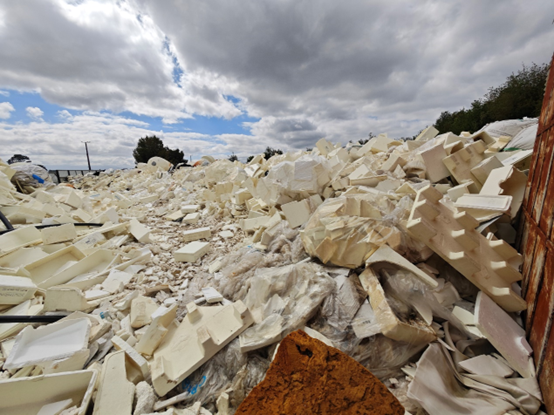
The recycling dilemma of seafood EPS foam packaging
Bulky: EPS foam has extremely low density and takes up a lot of transportation and storage space, making recycling logistics costs high.
Easily contaminated: EPS foam used to package seafood is often contaminated with fishy smell, residue and liquid, affecting its recycling value.
Improper treatment: Due to the lack of effective recycling channels, most of the discarded EPS foam is randomly discarded or burned, causing white pollution and air pollution.
Principles and advantages of EPS foam compactor The EPS foam compactor compresses the bulky EPS foam into high-density blocks through mechanical extrusion and hot melt technology. Benefits include: Significant volume reduction: The GREENMAX foam compactor reduces the volume of EPS foam to 1/50 of its original size, significantly reducing storage and transportation costs. This is a recycling machine that utilizes screw extrusion
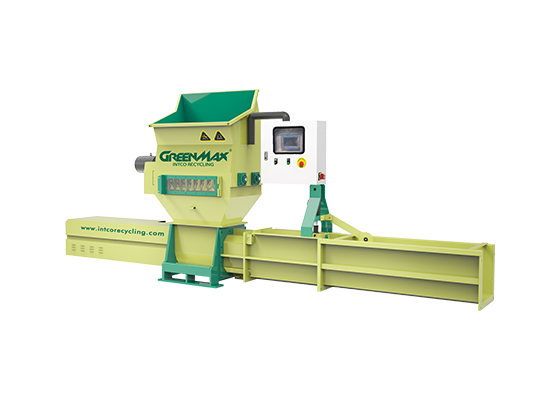
Easy handling: The compressed high-density foam blocks are easy to transport and stack, providing convenient conditions for subsequent recycling. Environmentally friendly and efficient: Compared with direct landfill or incineration, the use of foam compactors can effectively reduce the volume of waste and carbon dioxide emissions, and realize the recycling of resources. Application of EPS foam compactor in seafood packaging recycling
Source compression: EPS foam compactors can be deployed in fishing ports, seafood markets or cold chain logistics centers to compress waste packaging on the fly and avoid secondary pollution. Regional
Recycling Centers: Establish centralized recycling stations in coastal cities, and use EPS foam compactors to process bulk EPS foam in a unified manner to improve recycling efficiency. Recycling industry chain: The compressed EPS foam blocks are sent to the recycling plant, which can be processed into plastic pellets for the production of hangers, decorative materials or other plastic products.