In people’s impression, the EPS we recycle is usually lumpy and large EPS packaging, and EPS dust is often easily overlooked. In fact, a large amount of EPS dust will be produced when EPS is produced and cut. Some people think that EPS dust is difficult to recycle. , and even has no recycling value, so many people focus on recycling the whole EPS blocs, ignoring the EPS dust. In fact, giving up the recycling of EPS dust will cause more serious damage to the environment. Because EPS dust is small in size, it is easier to be blown into the natural environment by the wind, and because of its smaller diameter, it is a microplastic, which is more likely to be ingested by animals and cause damage to biological diversity.
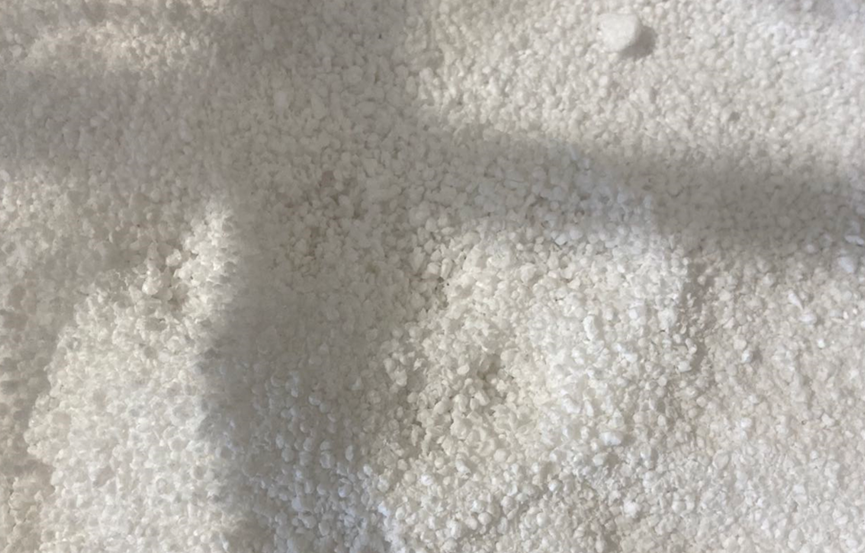
So how to recycle EPS dust? Are there any cases of successful recycling of EPS dust? Of course there is! GREENMAX EPS densifier can recycle fine EPS dust. Pour these fine dusts directly into the crushing chamber, because the volume of EPS dust is very small, so it does not need to be crushed, so the crushing knife can be removed. These EPS dust will directly enter the hot melt system to be heated and melted, then extruded, and become dense EPS ingots after cooling.

In order to better recover EPS dust, GREENMAX improves the feeding structure on the basis of EPS densifier, and uses the screw to assist in conveying EPS dust upwards, which helps the fine dust to be conveyed at a uniform speed and then melted. There are still many such minor changes for special materials, which is enough to prove the professionalism and rich practical experience of GREENMAX.
Microplastics are not only harmful to animals, but also have a serious impact on soil and groundwater: microplastics can undergo a variety of environmental chemical processes in soil, such as adsorption and release of heavy metals and persistent organic pollutants, etc., and can be weathered and degraded into granules Plastic particles with smaller diameters; these particles migrate in the soil and may lead to groundwater pollution; the existence of microplastics can affect the physical and chemical properties of the soil and the growth and reproduction of animals and plants. These effects will eventually affect humans. Therefore, it is necessary to use EPS densifier to recycle EPS dust.