ACH Foam Technology faced an unprecedented challenge in the Sheridan Elementary School building project in Chicago, which uses Geofoam to solve soil stability problems.
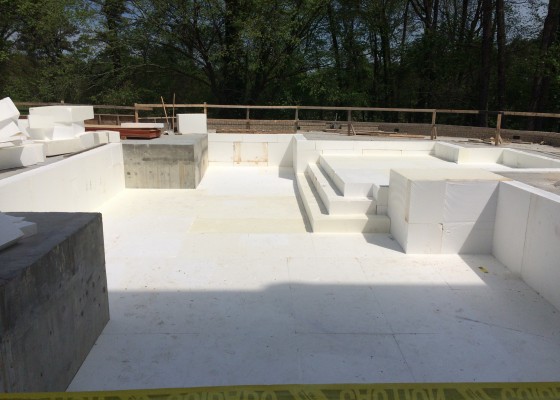
“Unstable soils, providing space for utilities, and the potential to negatively impact other adjacent buildings led to the Geofoam solution,” says Jim Nugent of ACH Foam Technologies.
Geofoam is made by expanded polystyrene. Expanded polystyrene (EPS), more commonly known as Styrofoam, is very light, waterproof and is not easily biodegradable by microorganisms by soil and water.
The reason why this company choose EPS Geofoam is that it can support live and dead loads of incredible proportions as its high-quality and non-degrading. When used architecturally, as in the case of the Sheridan Elementary concrete slab, Geofoam also provides a thermal insulation barrier, significantly adding to the building envelope’s overall R-value. ACH Foam Technologies’ Molded Polystyrene products have been proven to resist water absorption as well, or better than, other ridged foam insulations and come with a 50-year R-value warranty.
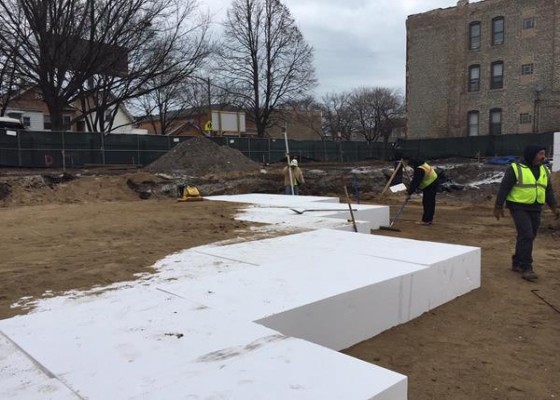
However, have you ever thought that where do these EPS Geofoams finally go when the building is abandon? And how will the industry of ACH Foam Technology dispose the scraps of EPS Geofoam?
With the wide use of EPS Geofoams, EPS disposal becomes a new difficulty. Fortunately, there are a lot of machines that can handle EPS materials successfully if you search key words “EPS recycling” or “EPS compactor” on the internet. GREENMAX, a kind of foam compactor, is a specialist in compressing EPS. And APOLO, a machine model of GREENMAX, can do a lot help for EPS recycling with high-quality components. It can decrease the volume of EPS as 50:1.
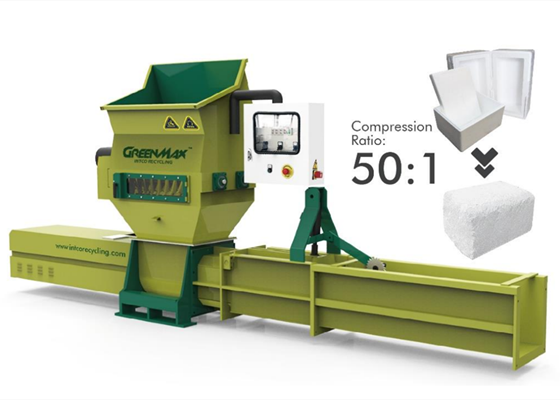
In addition, you can trust GREENMAX machine, because it is CE approved and comply with UL/CSA standards. Besides, you can common and share this article if you would like to talk about EPS recycling with us and give some advice.