Expanded polystyrene is widely used for protecting appliances, electronics, furniture, automotive components and other products during transportation. Although EPS offers excellent cushioning performance, it becomes a costly waste-management problem after use. The material is extremely lightweight but occupies a large volume, so loose EPS quickly fills warehouses, containers and collection vehicles.
For businesses that generate EPS continuously, frequent waste collections can increase transport and disposal costs. A truck may appear full while carrying only a small amount of actual plastic because most of the load is air. Installing an EPS compactor allows companies to reduce the foam volume directly at the source and create a dense material that is easier to store, transport and recycle.
A GREENMAX EPS compactor normally begins by crushing large foam pieces into smaller fragments. The crushed material then enters a screw compression system, where continuous mechanical pressure forms it into compact blocks. The process does not require the EPS to be fully melted, making cold compaction suitable for clean packaging foam and industrial production waste.
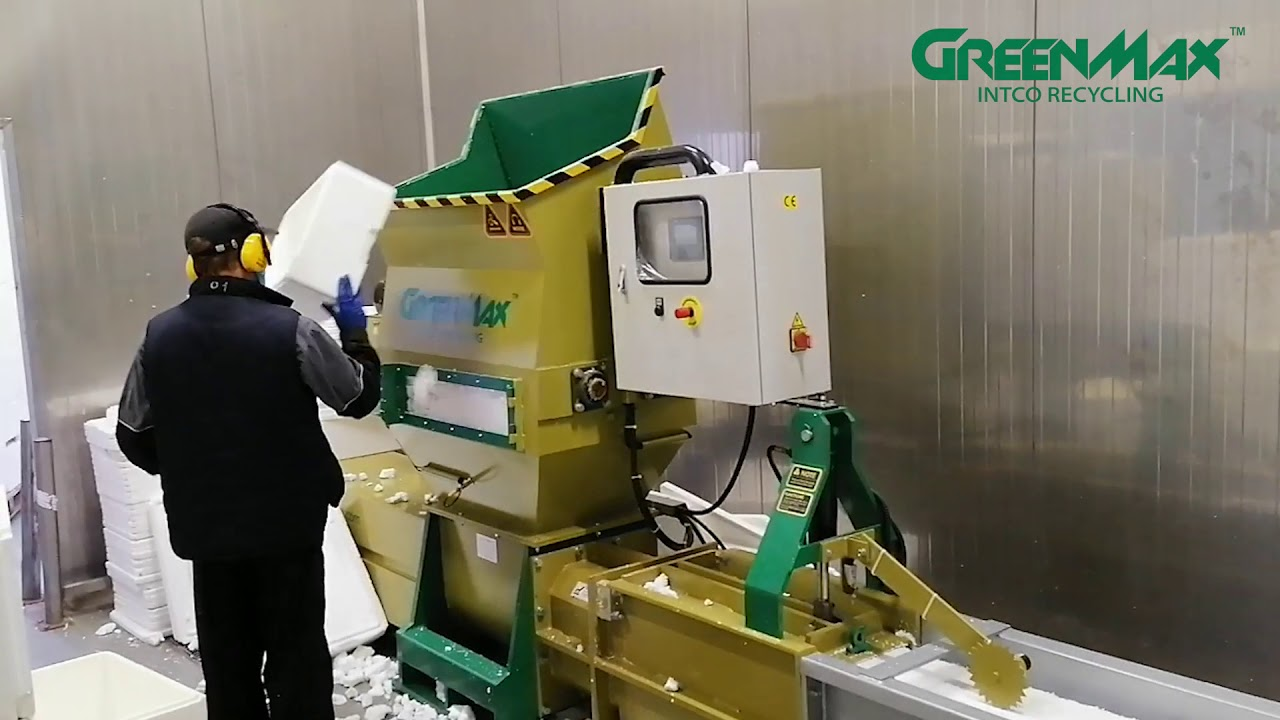
After compaction, significantly more material can be loaded into each truck. This reduces collection frequency and lowers the transport cost per tonne. The dense blocks are also easier to stack, helping companies recover valuable warehouse space and maintain a cleaner waste-handling area. Instead of paying repeatedly to remove loose foam, businesses can prepare the EPS for sale or delivery to downstream recycling companies.
A Czech industrial recycling company provides a practical example. The customer collected both EPS packaging foam and EPP industrial packaging waste from local businesses. Before investing in dedicated equipment, the loose foam occupied considerable storage space and created inefficient transportation conditions.
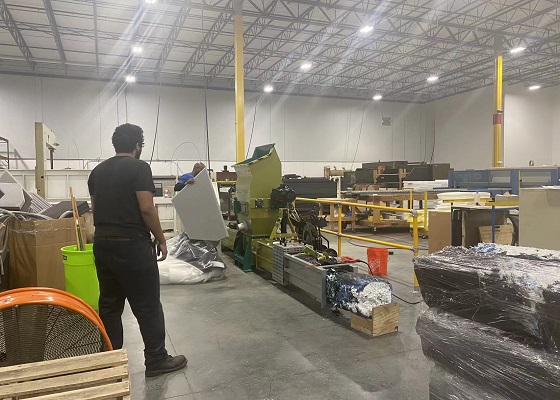
Following an on-site evaluation, GREENMAX recommended the Z-C200 screw foam compactor. The customer processes approximately 20 tonnes of EPS and EPP foam waste each month. By sorting the materials and running them in separate batches, the same machine can handle different foam streams while maintaining the quality of the recovered material.
GREENMAX also supported the customer with machine parameter optimisation according to the density and physical properties of the foam. After compaction, the blocks became denser, more stable and easier to transport. The customer reduced storage pressure, improved truck-loading efficiency and created a more valuable recycling output for downstream sales.
The recovered EPS can later be processed into recycled plastic pellets and used in products such as picture frames, decorative mouldings and plastic profiles. In this way, an EPS compactor does more than reduce waste volume. It helps transform a costly disposal problem into a recyclable resource.
For manufacturers, distributors and recycling companies, investing in a GREENMAX EPS compactor can reduce operating costs, improve workplace organisation and support a more efficient circular recycling process.