Across the world, expanded polystyrene (EPS) sits at an awkward intersection of convenience and scrutiny. Its protective performance keeps products safe, but its low density makes collection and transport inefficient unless it is compacted or densified first. That reality strongly shapes how each continent “feels” about EPS: regions with mature logistics and strict reporting frameworks tend to treat EPS as a measurable circularity project, while regions with less formal infrastructure often see EPS as a cost and litter problem that needs practical, local processing.
In Europe, the attitude is increasingly compliance-driven and ESG-linked. Packaging rules are tightening under the EU’s Packaging and Packaging Waste Regulation, which places clear expectations on recyclability and waste prevention. At the same time, ESG disclosure has pushed EPS from a “waste topic” into procurement and reporting conversations; the European Commission notes that the first CSRD-in-scope companies apply the new sustainability reporting rules for the 2024 financial year (reports published in 2025). Even so, the ESG regulatory mood is not one-directional: the European Parliament recently approved a deal to weaken parts of the EU’s corporate sustainability framework, showing the ongoing push-and-pull between ambition and compliance burden.
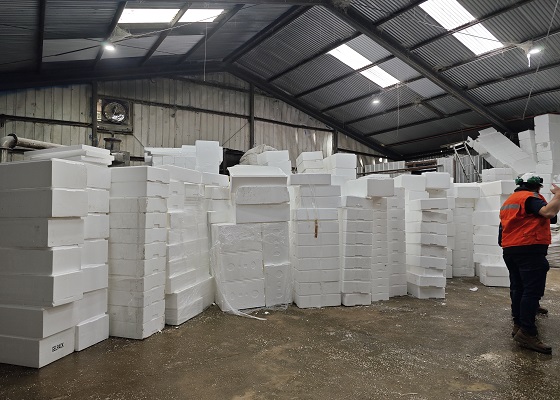
In North America, attitudes are more polarized: policy restrictions on foam foodservice items expand in some places, while industry and recyclers emphasize measurable progress when EPS is separately collected. The 2022 Expanded Polystyrene Recycling Report recorded 61.6 million pounds of post-consumer EPS recycled and 168.6 million pounds total recycled, with the report discussing ISO-aligned definitions and methodology. That coexistence of bans, voluntary programs, and business-to-business recovery channels is why many operators focus on making EPS “transportable” first, which is exactly where an EPS recycling machine that compacts EPS can change the economics.
In Asia, the prevailing stance is often pragmatic: EPS is treated as recyclable when systems are designed around concentrated commercial streams such as markets, distribution hubs, and manufacturing. The Global EPS Sustainability Alliance reports average EPS packaging recycling around 40% in Europe and notes that Japan, China, and South Korea have recycling rates above 50% under an ISO-style calculation approach. Japan is frequently referenced as a mature example; JEPSA reports an effective utilization rate for used EPS of 94.2% in 2024. In ESG terms, the emphasis tends to be operational proof—stable collection, clean feedstock, and demonstrated reuse—rather than broad public narratives.
In South America and Africa, the conversation more often centers on feasibility and infrastructure. South American initiatives frequently appear as targeted circular-economy projects, such as work describing an Ecuadorian manufacturer demonstrating pathways for recycling post-consumer EPS into resin.
Across parts of Africa, industry groups and policymakers focus on building systems and responsibilities; South Africa, for example, made EPR mandatory for paper and packaging sectors in 2021, reinforcing the ESG idea that producers should finance and organize end-of-life outcomes. These regions benefit disproportionately from local densification because reducing volume can determine whether collection is viable at all.
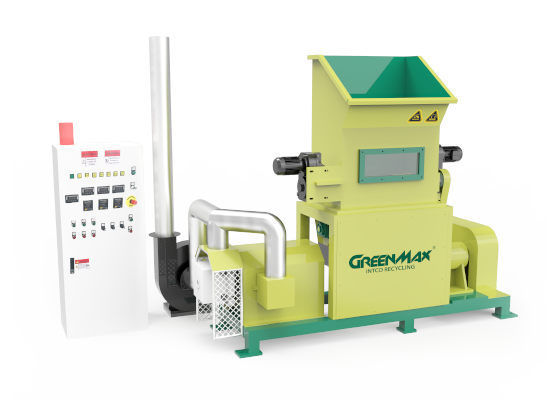
In Oceania, public sensitivity to marine litter and landfill constraints has encouraged councils and businesses to look for practical, site-based solutions. A clear case is Singleton Council in New South Wales, Australia, which adopted a GREENMAX foam densifier (M-C50) with a stated 50 kg/h capacity and implemented a local polystyrene recycling approach to divert material from landfill.
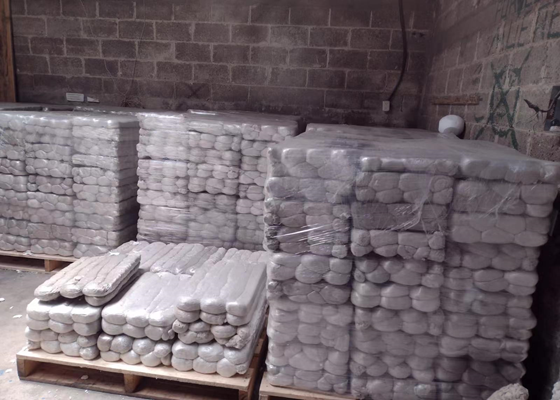
Another European case illustrates the same logic inside manufacturing: Whirlpool’s factory in Varese, Italy faced high costs from daily truck transport of EPS waste to a disposal yard about 100 km away, then shifted to on-site compaction using a GREENMAX EPS foam compactor (A-C200), enabling monthly pickups and reducing transport frequency and storage risk.
Taken together, global “attitudes” toward EPS are converging on a simple ESG reality: what gets measured and moved efficiently is what gets recycled. An EPS recycling machine that densifies EPS is often the enabling step that turns policy goals and ESG commitments into consistent, auditable material recovery.