ProductionIn the context of increasingly heightened environmental awareness, ‘waste reduction’ and ‘resource recycling’ have become key directions for addressing environmental challenges. Among them, the recycling of waste foam (EPS, expandable polystyrene) has always been a focal point in the industry—this type of material is bulky, low in density, and long-term accumulation not only occupies a large amount of land but also causes ‘white pollution’ due to its difficulty in natural degradation. Through the ‘granulation recycling + frame production’ industrial chain model, waste foam can be transformed into cost-effective industrial raw materials, thereby addressing environmental pain points and creating economic value for enterprises. This article will thoroughly break down this recycling process, from raw material processing to finished product output, presenting the technical key points and practical value.
Premise Cognition: Why choose waste foam granulation?
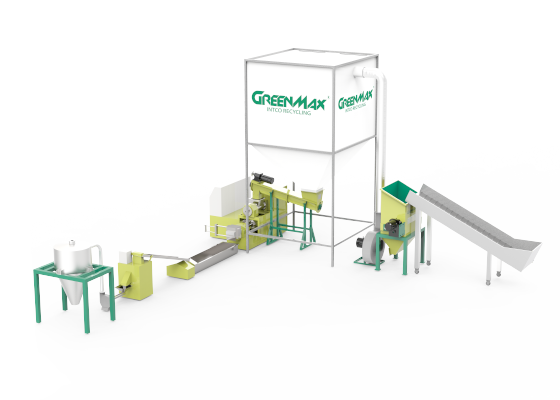
The recycling value of waste foam stems from its chemical properties: although lightweight, polystyrene has good thermoplasticity. Through processes such as heating, melting, and extrusion molding, it can be reprocessed into granules with stable physical properties (commonly referred to as ‘foam recycled granules’). Compared to virgin plastic granules, the cost of foam recycled granules is only 1/3 to 1/2 of the former, and their performance meets the production needs of various products such as frames, packaging materials, and building fillers, making them a ‘cost-effective choice’ in the plastic processing industry.
Furthermore, from an environmental perspective, recycling 1 ton of waste foam can reduce approximately 8.5 tons of carbon dioxide emissions and avoid about 0.3 acres of land being occupied (based on traditional landfill density). This model of ‘turning waste into treasure’ aligns with the national ‘dual carbon’ policy direction and provides new profit avenues for waste recycling companies and plastic processing factories.
The full process operation of waste foam granulation
Foam granulation is a key step in transforming scattered waste foam into standardized raw materials. It involves four main stages: “pre-treatment – melting extrusion – pelletizing – cooling and drying,” where the process control of each stage directly affects the quality of the pellets.Using foam recycled pellets to make frames
The application scenarios for foam recycled pellets are broad, among which “frame making” (such as frame strips for photo frames, painting frames, decorative frames, and support frame strips for packaging, etc.) is a direction with low technical barriers and stable market demand. The manufacturing process mainly relies on extrusion molding technology.
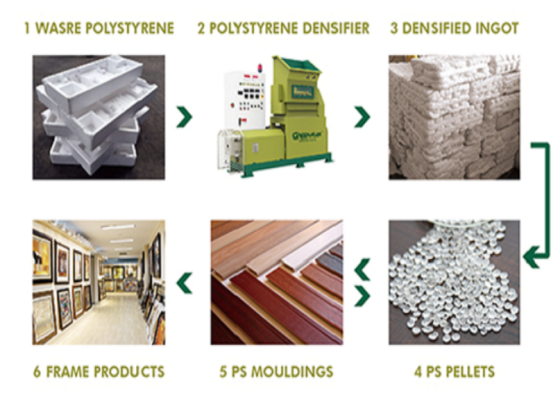
From waste foam to recycled pellets, and then to practical frame strips, this industrial chain not only solves the “white pollution” management challenges but also establishes a win-win business model of “environmental protection + economy.” For entrepreneurs or small and medium-sized enterprises, this project features “low investment, low barriers, and stable returns”; for the industry, this “locally adapted recycling model” provides a replicable and promotable example for the development of the plastic circular economy. With the continuous upgrading of technology (such as more efficient granulation equipment and more environmentally friendly additives), the recycling value of waste foam will be further released, injecting more momentum into green development.