With the rapid development of the automobile industry, the application of lightweight materials in automobile manufacturing has become increasingly important. Among them, EPP foam (Expanded Polypropylene, expanded polypropylene) is widely used in automotive parts, such as bumpers, door panels, headrests and floor sound insulation mats, due to its excellent strength, elasticity, durability and shock-absorbing properties. Although EPP foam has excellent functions, how to effectively recycle it after its life cycle has become an issue that cannot be ignored on the road to sustainable development for the automotive industry.
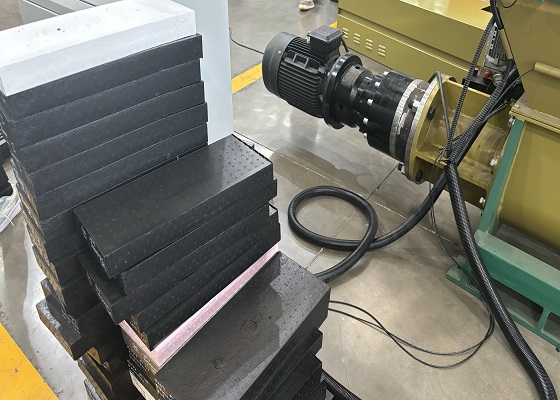
However, despite the recyclability of EPP foam, its recycling rate is actually not high. This is mainly due to the larger volume and lower density of EPP foam, which results in higher transportation and handling costs during the recycling process. In addition, EPP foam is often used in combination with other materials, and the separation process is complicated, further increasing the difficulty of recycling. Mechanical recycling is the most common recycling method of EPP foam. Through crushing and screw extrusion, the waste EPP foam auto parts are processed into particles or sheets, and then injected into the mold again to make new auto parts or other products. Although this process is relatively simple, it has the problem that the properties of the material may be degraded after processing, so in practical applications, recycled materials are often mixed with new materials.
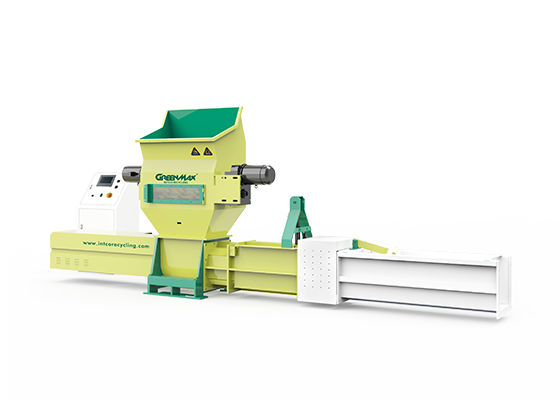
So how to deal with uncompressed EPP foam? The first and most important thing is to evacuate the air inside. GREENMAX recommends using the foam compactor Zeus series for compression. This equipment uses cold pressing technology for compression, and then hot-melts the surface of the blocs to achieve stronger compression. The main compression process of GREENMAX foam compactor is crushing and screw extrusion, and finally surface hot melting. The compression ratio can reach 50:1.
With the increasing awareness of environmental protection and the promotion of relevant regulations, the automotive industry’s demand for EPP foam recycling technology will continue to grow. In the future, more automakers may respond to resource shortages and environmental pressures by designing EPP parts that are easier to recycle and using a higher proportion of recycled materials. In addition, with the advancement of technology, the cost of EPP foam recycling will be further reduced and the recycling efficiency will also be improved.
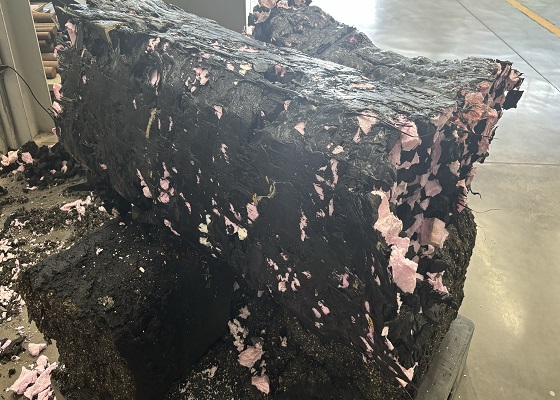
In the long run, EPP foam recycling can not only help reduce waste accumulation, but also save energy and reduce reliance on new materials. Therefore, promoting the recycling of EPP foam automobile parts is not only an important step in achieving sustainable development of the automobile industry, but also an effective way to deal with global environmental problems.