The Asian Development Bank has announced plans to spend $5 billion, including through syndicated loans, from 2019 to 2024 to help the Asia-Pacific region tackle EPS waste and other forms of marine pollution.

ADB President Takehiko Nakao said in his opening address at the bank’s annual meeting in Nadi on Friday:”Healthy oceans are essential to our planet and for millions of people in Asia and the Pacific. But our oceans are in danger. ” The degree of EPS pollution has caused global concern, and how to deal with EPS waste has become a global problem.

The source of EPS pollution is EPS, so countless media and organizations are calling for a reduction in the use of EPS and the dangers of EPS to us. In fact, this method of reducing the use of EPS has had little effect until no material is found that can completely replace EPS.
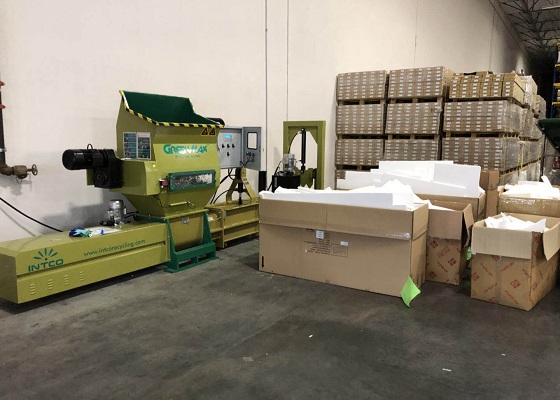
At present, EPS recycling is the most widely accepted method of mass EPS waste discharge. Only one GREENMAX A-C200 professional EPS compactor machine is needed. This machine can compactor EPS wastes technology and compactor EPS into blocks at a high ratio of 50:1. Recycled EPS blocks are smaller in size and can be easily stored and transported. Moreover, the cost of EPS recycling has always been misunderstood, and it can also be solved by selling recycled EPS blocks. The recycled EPS blocks have a broad end market and can be made into wood-like materials.
The problem of EPS pollution, which has already attracted the attention of the whole people, will always be solved in the future, but before it is solved, we need to use EPS recycling to alleviate it. This is what we need to do at this stage.